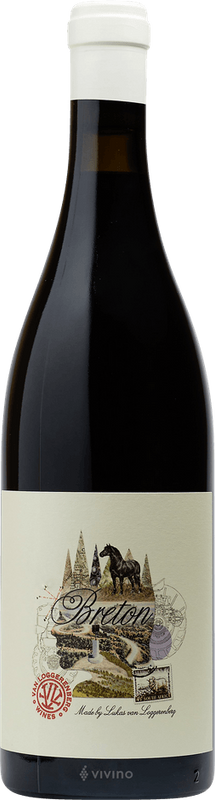
Van Loggerenberg Cabernet Franc Breton 2022 - Van Loggerenberg
Bottle Size
Vintage
Special Packaging
CHF43.95
CHF5.86/10cl
07.07.2026
3% quantity discount for orders over 24 bottles
About the wine
The winemaker from the South African winery Van Loggerenberg greets us with this wine, which he grows in the countryside. With the strong red wine 2017 — Van Loggerenberg Cabernet Franc Breton, you can offer your guests something very special. Flaschenpöstler tip: Combine this Cabernet Franc with goat cheese or ravioli.
Item no. 1220679
Tasting note
The quality of the tannins in Breton 2022 builds up the layers of fruit, flowers and spices into a crescendo and lingers on your palate for a good minute. Salty and refreshing, this Cabernet Franc is a reference in South Africa.
Culinary recommendation
Enjoy this fantastic wine with a classic braai.
Vinification
Van Loggerenberg Wines was founded by Lukas and his wife Roxanne with their first vintage in 2016. The 2020 edition is the fifth release for Lukas - a rising star, Young Gun and 2018 Young Winemaker of the Year by Tim Atkin. Lukas grew up in Rawsonville in the Breederivier Valley and was always surrounded by vineyards and wine. His wines are produced in the Devon Valley, and the grapes come from Stellenbosch, Paarl and Swartland. Each wine and its name has a specific story behind it, and its wines have become extremely sought after. The name Breton is derived from the old French term in the Loire for Cabernet Franc. We chose this name because we made the final decision to found Van Loggerenberg Wines in the Loire Valley. The wine consists of two plots, the majority of which comes from Klein Welmoed Farm (65%), which was planted in 2008 and the remaining 35% from Bluegum Grove Farm on Vlaeberg Road, which was planted in 2004. The grapes are picked and vinified separately and assembled first before bottling. The vines of the two vineyards are planted on decomposted granite with coffee clips in the top layer of soil. 30% of the grapes were fermented as whole bundles, while the destemmed grapes were left on the skins for two weeks to give the middle palate more depth. After fermentation, the wine underwent malolactic fermentation in barrels. The various components were assembled after 10 months and immediately bottled. Neither enzymes nor commercial yeasts were used in the production of the wines.
More information
Allergy information: Contains sulfites
Customer reviews
Reviews can only be added when you are logged in.