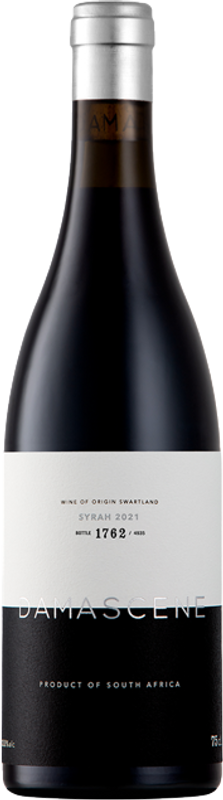
Damascene Syrah Swartland 2023 - Damascene Vineyards
95Robert Parker
Bottle Size
Vintage
Special Packaging
CHF48.95
CHF6.53/10cl
09.07.2026
3% quantity discount for orders over 24 bottles
About the wine
The Damascene Syrah from Swartland offers vibrant fruit and a smooth, structured texture, crafted with care from Shiraz and Syrah grapes. This 2023 vintage reflects Damascene Vineyards’ commitment to authentic, hands-on winemaking. It’s a great pick for relaxed evenings or sharing with friends.
Robert Parker: 95/100
James Suckling: 94/100
Item no. 1220631
James Suckling: 94/100
Item no. 1220631
Tasting note
The Swartland Syrah is by far the most atmospheric of the Damascen-Syrah trio and opens with an impressive aromatic depth, featuring wild blackberries, anise, mulberries and spicy Kalamata olive tapenade. The weighty palate keeps pace with the vanguard and has the strength to bear the lively, ripe fruit of blackberries and black plums, underpinned by tight, firm tannins from the black cherry skin. The muscular fruit core is garnished with star anise, Sichuan pepper and accents of cloves, together with subtle notes of red pepper in the plum-rich finish.
Culinary recommendation
Goes fantastically with braised beef cheeks, parsley roots and porcini mushroom foam.
Vinification
The vineyards that produce the fruit for this wine are cultivated on three impressively different Swartland locations. The first block of bush vines is located at the foothills of the Paardeberg (at an altitude of 290 m) and is deeply rooted in old, free-draining, decomposed granite soils. This location faces northwest and gives the wine perfume, spice and purity. The second vineyard is located in the heart of Swartland and faces north. These bush vines are planted on Malmesbury slate and iron soil, which provide a distinctive structure, acidity and minerality. The most important vineyard is the western foot of the Kasteelberg at 340 m above sea level. This slope consists of a slate outcrop that faces southeast and has a lot of structure and fruit depth. Damascene will plant more Syrah vineyards in this location in 2023. This Swartland Syrah has the typical concentration of low-yielding vineyards planted under Mediterranean climate conditions. With this in mind, whole berry fermentation was used to ensure that the finished wine did not lack elegance. Depending on the plot, between 60 and 75% of the fruit was fermented as whole grapes. Fermentation took place in tulip-shaped concrete containers and two 1000 liter conical oak barrels, with the number of transfers during main fermentation being limited to a maximum of two per day. Two of the batches were fermented underwater to ensure a wider mouthfeel. All fermentations took place spontaneously, using only naturally occurring yeasts. The malolactic transformation took place spontaneously, after which the wine was aged for 11 months in 2000-liter Austrian oak containers. The wine was bottled without fining to ensure a more complex and authentic Syrah expression.
More information
Allergy information: Contains sulfites
Customer reviews
Reviews can only be added when you are logged in.